Common Sense Media
- 4.6
- Rating
- 100.00K
- Installs
- Free
- Price

 Analysis by App-foxy
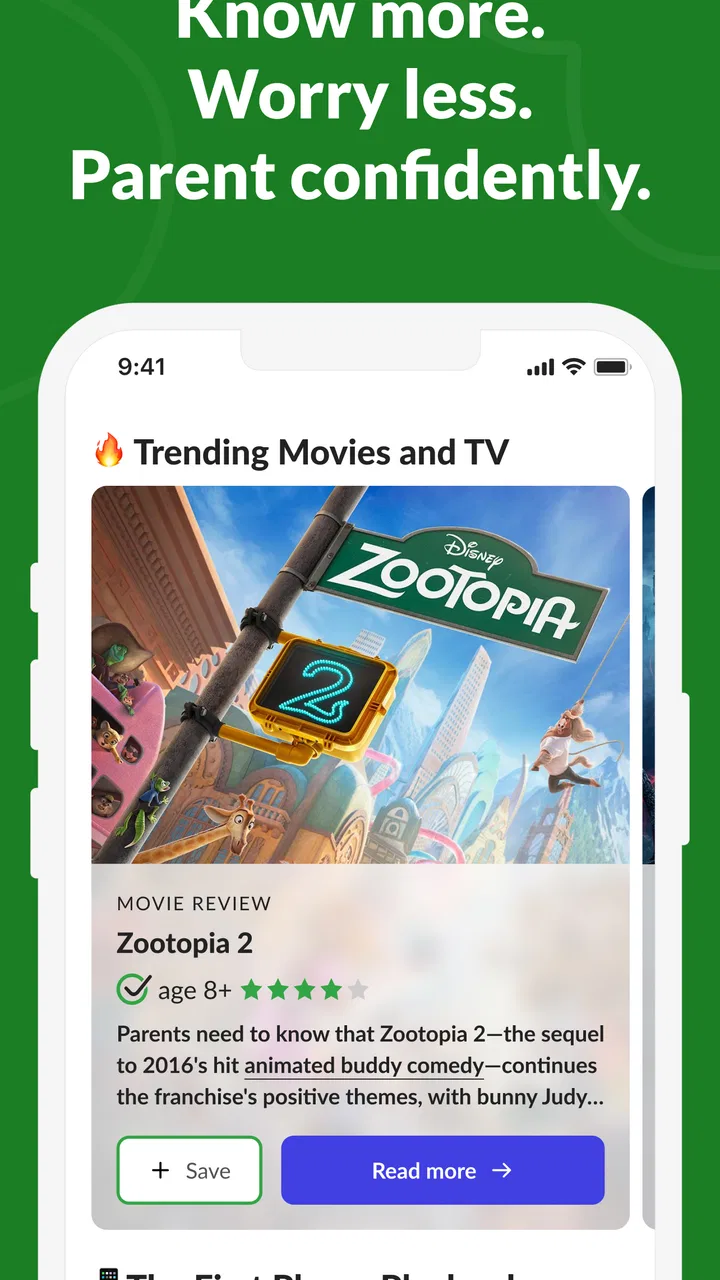
I found Common Sense Media most useful when I treated it as a conversation starter rather than a simple “is this suitable?” button. It is a free parenting app from Common Sense Media that helps families look into movies and television before deciding what to watch. The focus is practical: understand the material, think about age suitability, and make a choice that fits a particular child rather than relying only on a broad rating.
That distinction matters because children of the same age can react very differently to frightening scenes, rude language, romance, violence, or difficult subjects. In my experience, the app works best when I use it shortly before a family viewing decision, not when I expect it to replace my own judgement. Its average rating is 4.6 from around 1.9 thousand ratings, and it has passed 100 thousand installs, which gives it a reassuring level of visibility among parenting tools.
Where the experience can become confusing
The first point of friction is knowing what kind of answer you want. A parent may search for a title expecting one official age number, while the useful part of Common Sense Media is the surrounding explanation. The app is designed around trusted movie and TV guidance created with families in mind, so the result is more useful when you read it as context: what appears on screen, what might concern a younger viewer, and what could lead to a worthwhile discussion.
You May Also Like

 Blood Strike: 2.5 Anniversary
Blood Strike’s Loadouts Turn Every Drop Into a Tactical Gamble
A close look at Blood Strike’s custom loadouts: how fast access to signature weapons reshapes its battle royale rhythm, rewards preparation, and narrows the gap between fights.

 Pandora - Music & Podcasts
Pandora’s Music Is Easy to Start, but Harder to Recover
Pandora’s strength is its low-effort path from a seed to a station. Its weak spot is how much confidence it asks you to place in connection, setup, and quiet recovery.

 8 Ball Pool
 Is Built on Rivalries, Rematches, and Routine
A close look at the rivalries, rematches, shared routines, and unanswered safety questions that turn a quick pool match into a persistent mobile community.

 Samsung Music
’s Quiet Strength Is Playing What You Already Own
Its reach comes less from spectacle than from dependable access to a personal library. That simplicity is both the app’s strongest retention engine and its ceiling.

 AccuWeather: Weather Radar
AccuWeather Review: A Quick, Clear Forecast for Everyday Decisions
For everyday plans, the best forecast is the one you can understand quickly. AccuWeather makes rain timing, radar, and local conditions easy to act on, with a few trade-offs.

 Hill Climb Racing
Why Hill Climb Racing Still Turns Crashes Into One More Run
A tiny car, a bumpy hill and one more upgrade: Hill Climb Racing keeps resurfacing because its simple chaos makes every near-miss feel personal.
More From Our News Desk



This can feel slower than checking a standard content label. A conventional rating is quick, but it rarely tells me whether the concern is a brief scary moment, repeated profanity, a complicated theme, or behavior that a child might imitate. The extra reading is the trade-off here. If I only need a fast yes-or-no answer while a film is already starting, the app may feel less convenient than a basic rating guide.
I also would not use it as a substitute for knowing my own child. A title described as manageable for one age group may still be a poor choice for a child who is sensitive to suspense or who has recently experienced a difficult situation. The app can organize the decision, but it cannot know the family context unless I bring that context myself.
A more subtle issue is that parents can focus too heavily on age guidance and overlook the reason behind it. I get more value by scanning the specific concerns first, then deciding whether they matter in my household. That approach avoids treating the recommendation as a universal rule. It also makes the app more useful for siblings with different needs, because I can judge the same title separately for each child.
Use the app before the pressure of family movie night
A realistic everyday situation is a Friday evening when a child has chosen a film, friends are waiting, and nobody wants a long argument. I would open the app earlier in the day, search the title, and look for the sections most relevant to that child. If the concern is frightening content, I would pay attention to that rather than spending equal time on every category. Then I could decide whether to watch it, save it for later, or choose something else before the children are already invested in the choice.
That small change in timing is important. Looking things up in advance gives me room to explain a decision calmly. It also prevents the common situation where a parent starts a film, notices a problem several minutes in, and has to stop it in front of everyone. Common Sense Media is not especially valuable because it makes the decision for me; it is valuable because it moves the decision earlier and gives me language for explaining it.
Setup checks that prevent avoidable frustration
Getting started should be straightforward for most families because the app is free to install and is rated for Everyone. It was released on September 12, 2023, and the current version is 1.15.0. On Android, it supports devices running Android 7.0 or later. Before blaming the app for a missing or incomplete result, I would first check that the device meets that requirement and that the app has finished updating.
I would also begin with a very clear title search. Movies and shows can have similar names, alternate titles, sequels, or different versions. If the first result looks wrong, I would avoid assuming the review is inaccurate. I would check the title, year or other identifying information shown in the result, then try a shorter or more distinctive part of the name. This is a simple habit, but it prevents a surprisingly common mistake: reading the guidance for a different production.
Another useful setup check is deciding who will use the app and where. If a child is going to browse alongside a parent, I would make the first few searches together and explain that the app is a guide, not a punishment tool. If only adults will use it, I would keep the conversation focused on matching content to the child’s temperament. The same information can support either approach, but the tone changes how helpful it becomes.
Parents should also remember that the app is not the viewing service itself. It helps with research and judgement; it does not turn the phone into a complete family entertainment hub. If I am expecting to search, read guidance, and immediately play every title from the same place, I may find the workflow less direct than using a streaming service alongside a separate browser search. Its strength is editorial context, not replacing the rest of the viewing setup.
There is also a financial detail worth noticing. The app is free, but in-app purchases range from $3.99 to $39.99 per item. That means I would check the purchase screen carefully before confirming anything, especially if a child is handling the device. The free starting point makes it easy to try, but “free” should not be interpreted as meaning that every possible part of the experience has no paid option.
Make the first search purposeful
Rather than randomly browsing, I would test the app with a title I already know the family is considering. That gives me a practical benchmark: Is the information easy to understand? Does it address the concern I actually have? Can I turn the guidance into a clear decision? Starting with a real family choice is more revealing than simply opening screens and judging the layout in isolation.
I would then repeat the process with a title that has a different type of concern. For example, a parent may care about scary imagery for one child and language or mature themes for another. This helps reveal whether the app fits the way the household makes decisions. The non-obvious benefit is that it encourages parents to identify their own priorities instead of applying one rigid checklist to every film and show.
If the app asks for an update, I would complete that before drawing conclusions about search behavior. An older installation can behave differently from the current version, and troubleshooting becomes needlessly confusing when the basic software is not current. I would also close and reopen the app after an update, then repeat the same search. That is ordinary maintenance, but it is a sensible first step before assuming a title or review has disappeared.
Recovering the workflow when a search goes wrong
When I cannot find a title, I would work through the problem in a fixed order. First, I would check spelling and remove extra words. Next, I would try the most distinctive word in the title. If that fails, I would look for an alternate title or a related entry rather than repeatedly tapping the same search. This method is faster than guessing whether the service is broken, and it keeps the troubleshooting grounded in the way entertainment titles are commonly named.
If a page loads slowly or appears incomplete, I would check the device connection, wait briefly, and retry once. I would then close the app completely and reopen it. If the problem affects only one title, I would treat it differently from a problem affecting every search. A single troublesome result may be a title-matching issue; a general failure suggests looking at the app, device, or connection more broadly.
I would avoid making a parenting decision from a partial page. If the information that matters to me has not loaded, I would either retry later or use another dependable source before starting the film. The app is helpful precisely because it gives context, so acting on half of that context defeats the purpose. This is one of the few situations where waiting is better than improvising.
For families who use the app repeatedly, I recommend a small personal routine: search the title, read the age guidance, identify the specific concern, and translate it into one sentence about your child. For example, I might ask whether a frightening sequence is likely to be upsetting, or whether a difficult theme needs an adult conversation afterward. This turns the app from passive reading into a repeatable decision process.
It is also worth separating a content disagreement from a technical problem. I may think the guidance is too cautious or not cautious enough, but that does not mean the app has malfunctioned. Editorial judgement and device performance are different questions. Keeping them separate helps me decide whether to adjust my family rule or troubleshoot the installation.
When another option is more efficient
Common Sense Media compares favorably with a basic age label because it gives parents more to think about. It is less efficient than a quick search engine snippet when I only want to know whether a title has a particular broad rating. It is also not the best fit for someone who wants a single universal standard and does not want to read explanations. The app earns its place when the “why” matters more than the speed of the answer.
Compared with asking friends or relying on social media, its family-oriented focus is more consistent and easier to apply. Personal recommendations can be useful, but another parent’s tolerance may be very different from mine. The app gives me a structured starting point, while informal advice often leaves out details or assumes that every child reacts alike.
Compared with checking a streaming service’s own labels, the advantage is deeper consideration of family suitability. The disadvantage is that I may need to move between the guidance and the service where I actually watch. For a household that already has a careful pre-screening habit, that extra step is reasonable. For someone who wants everything in one place, it may feel like unnecessary switching.
When the app is not the cause of the problem
If a title cannot be played, that is normally a question for the streaming service or device rather than this parenting guide. If a subscription blocks viewing, the app cannot change that. If parental controls hide content elsewhere, the app is not necessarily responsible. I find it helpful to ask what failed: the search, the review page, or the actual playback. Each points to a different solution.
The same separation applies to account and purchase concerns. Since optional purchases can be made in the app, I would inspect the platform’s purchase settings and the device’s family controls if an unexpected charge appears. I would not assume that a content review app controls every transaction connected with watching a title. Keeping payment, playback, and editorial guidance in separate mental boxes makes troubleshooting much less stressful.
There are also limits that no technical fix can solve. A review may describe a concern, but it cannot predict whether a particular child will have a nightmare, copy a character’s behavior, or ask a difficult question. That is why I would use the app as preparation for a conversation. If a topic could be sensitive, I would decide in advance whether I am comfortable pausing, explaining, or stopping the viewing.
Families with very young children may prefer a tightly controlled, curated service instead of researching individual titles. Families with older children may want more independence and only occasional checks. Common Sense Media sits between those approaches: it supports parental judgement without automatically controlling what appears on screen. That flexibility is a strength for some households and a weakness for parents looking for automatic enforcement.
Who will get the most from it
I would recommend it to parents who regularly make shared viewing decisions, especially when children have different sensitivities or when a title raises a specific concern. It is also useful for adults who dislike vague warnings and want enough context to decide whether a film deserves a conversation before viewing. The app’s Everyone age rating makes it approachable as a family-oriented tool, although the material being researched can of course be intended for different audiences.
I would be more cautious about recommending it to someone who expects a complete streaming catalog, automatic blocking, or a guaranteed answer for every family. It is not a replacement for supervision. It also may not suit a parent who is unwilling to spend a few minutes reading and thinking about the guidance. In that case, a simpler rating system may be a better everyday fit, even if it offers less detail.
The developer, Common Sense Media, gives the app a clear identity: it is built around helping families make more informed media choices. That focus is more meaningful to me than a long list of technical features. The important question is not whether the app can make every decision effortless, but whether it improves the quality of the decisions I make with my children.
My practical verdict after using it as a parent
Common Sense Media is most successful when I use it before a viewing decision, with one child and one specific concern in mind. It gives me a better starting point than a bare age label and helps turn vague worry into a manageable conversation. The process is not completely frictionless: I may need to identify the right title, read beyond the headline guidance, and move to another service for playback. Still, those extra steps feel justified when the choice matters.
I would install it for a household that often asks, “Is this suitable for our child?” but I would not treat the answer as an automatic permission slip. My preferred workflow is to search early, verify the title, read the relevant concerns, and decide how much explanation or supervision the child needs. If the app or page behaves strangely, I would update, retry, and separate search problems from playback or account problems before abandoning it.
The free app is easy to try, supports a thoughtful parenting routine, and has enough practical value to earn a place beside a streaming service. The optional paid items mean I would pay attention during installation and use, particularly on a shared device. For parents who want context rather than a single number, it is a useful companion. For those seeking automatic controls or one-tap answers, another option will probably feel more natural.
My final recommendation is positive but specific: use it as a research and discussion tool, not as a substitute for knowing your child. When I give the guidance that final human step, the app becomes genuinely helpful. Without that step, even the most carefully written review can only offer a general direction.
FAQs for Common Sense Media
01What is Common Sense Media used for?
Common Sense Media is a family-focused platform that provides reviews, ratings, and guidance for movies, TV shows, apps, games, books, and websites. Its main purpose is to help parents and caregivers decide whether content is suitable for children based on age recommendations, educational value, positive messages, language, violence, sexuality, and other themes that may affect younger audiences.
02Does Common Sense Media offer age ratings for apps, games, and movies?
Yes. Common Sense Media provides age recommendations for many types of entertainment and digital content. These recommendations are supported by explanations describing what parents may encounter, such as scary scenes, violence, mature language, romantic themes, or in-app purchases. The ratings are useful as a starting point, although families should still consider a child’s maturity, sensitivities, and individual needs.
03Is Common Sense Media free to use?
Much of the basic information on Common Sense Media can be accessed without paying, including many reviews, age recommendations, and content summaries. Depending on the version of the service, location, and available features, some educational resources, memberships, or premium offerings may require payment. It is worth checking the current terms before subscribing or assuming every feature is included for free.
04Can children use Common Sense Media safely on their own?
Common Sense Media is designed primarily as a resource for parents, educators, and caregivers rather than as an unrestricted entertainment app for children. The content is generally family-oriented, but reviews may discuss mature subjects in detail. Parents should guide younger users, review privacy settings, and explain that ratings are recommendations rather than absolute guarantees about what a child will encounter.
05How reliable are the reviews and recommendations on Common Sense Media?
Common Sense Media is widely used because its reviews provide more detail than a simple age label, often separating professional opinions from comments or ratings submitted by users and families. However, no review can perfectly predict how every child will react to content. Parents should read the full description, compare it with their household values, and consider current reviews because media can change over time.
Pros
- Detailed reviews help parents assess apps
- games
- movies
- and shows.
- Age recommendations and content ratings make family decisions easier.
- Includes information about violence
- language
- sex
- and mature themes.
- Parent and child reviews provide multiple perspectives on media suitability.
- Search and category filters make it easy to find specific entertainment titles.
Cons
- Some reviews may reflect subjective opinions rather than universal standards.
- Certain newer or niche titles may have limited user feedback.
- The amount of content can feel overwhelming for first-time users.
- Some features and information may require an internet connection.
- Ratings may not fully match every family’s personal values or rules.

Common Sense Media
Gallery